PVC Decking in Everett, WA
Capped PVC boards for decks that stay put through a Puget Sound winter.
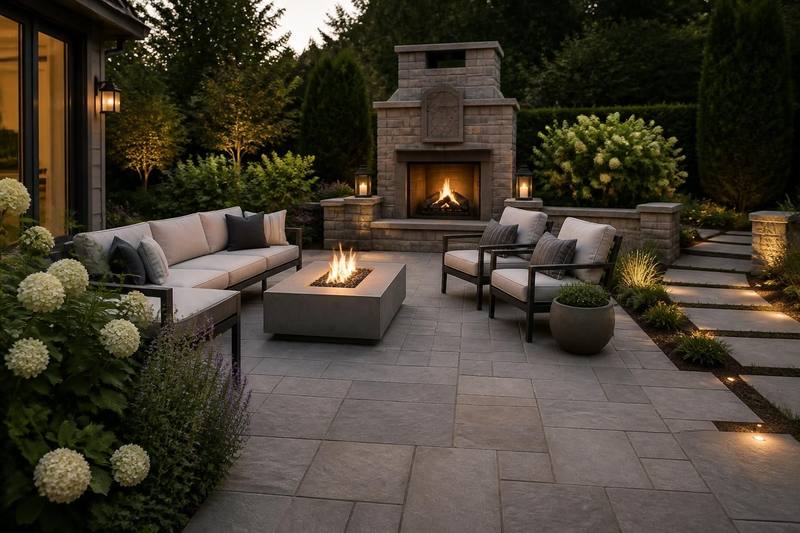
PVC decking is a plastic board with no wood fibre in it, so it does not soak up water, rot or feed mould. We build new PVC decks and replace worn-out wood decks with it for Everett homeowners who want a surface that stays stable in constant damp. It is part of our [deck building](/services/deck-building/) work.
What capped PVC decking is made of
A PVC deck board is extruded from polyvinyl chloride, the same family of plastic used in exterior trim and fencing. Unlike wood, and unlike many wood-plastic boards, there is no organic filler inside. Nothing in the board can swell, wick moisture or become food for fungus.
Most boards sold today are capped. A cap is a hard outer layer fused to the core during manufacturing. It carries the colour, the grain pattern and the stain and scratch resistance, and it wraps the board on the faces that get wet and walked on. The core underneath gives the board its shape and stiffness.
What the cap and core do not do is hold the deck up. The frame still carries the load, so a PVC deck is only as sound as the joists, beams, posts and footings under it.
Solid, hollow and cellular PVC boards
Not every PVC board is built the same way. The profile changes how it feels underfoot, how it handles heat and how it is fastened.
Hollow-core boards
These have ribs and open channels inside. They are lighter and easier to carry and cut. The open channels can rattle if they are not fastened well, and the board edges need end caps or fascia so the hollow sections are not visible.
Cellular and foamed-core boards
A foamed core is denser than a hollow profile and gives a firmer, quieter feel. It holds fasteners well and tends to span a little better. This is the profile we reach for on decks that see heavy furniture or a lot of foot traffic.
Solid and scalloped profiles
Some boards have a flat underside, others are scalloped on the back to save weight. Both are fine on a properly framed deck. What matters is that the profile suits the joist spacing the manufacturer lists for it.
When PVC decking is the right material
PVC makes the most sense where water is the main problem. Ground-level decks with poor airflow underneath, decks under tall evergreens that never dry out, and decks beside a hot tub or a pond all stay wet longer than wood can tolerate.
It also suits homeowners who are tired of sanding and resealing. A capped PVC surface never needs staining or sealing. If you are still deciding between plastic and fibre-based boards, our page on composite decking explains how the two differ.
PVC is a poorer choice if you want a surface that stays cool in full afternoon sun, or if you want the look and feel of real timber. Dark PVC colours in direct sun can get hot enough to be uncomfortable barefoot. We will say so plainly if your deck faces that way.
- Shaded or low decks that stay damp
- Decks near water, hot tubs or irrigation
- Stairs and landings that stay slick under wood
- Owners who do not want to stain or seal
How a PVC deck installation goes, step by step
The visible boards are the last thing to go on. Most of the work happens underneath, and most PVC problems trace back to the frame.
Frame and footings
We lay out the footings, posts, beams and joists first. Pressure-treated lumber is normal for the frame, with joist tape or flashing on the tops of the joists to keep water out of the wood the boards sit on. PVC boards flex more than wood, so joists are usually set at 12 or 16 inches on centre, depending on the board maker's span chart.
Gaps and expansion
PVC expands and contracts with temperature far more than wood does. Each board is gapped at the ends and sides according to the temperature on the day it is laid. A board installed on a cold morning needs a wider end gap than one installed in July heat.
Fasteners and finishing
Boards go down with hidden clips, or with colour-matched screws on stairs and edges. Hidden clips keep the surface clean and let the board move. Fascia boards, end caps and stair risers in matching PVC close the edges so the deck looks finished from the yard.
Heat, colour and surface care
Lighter colours reflect more heat and stay more comfortable underfoot. Darker boards look richer but run hotter in direct sun. Everett summers are dry and mild, and we rarely see the extremes that make this a serious problem, but a south-facing deck still warms up on a clear August afternoon.
Cleaning is simple. Sweep off needles and leaves, then wash the surface with a soft brush, mild soap and water. Avoid pressure washing at close range, which can scar the cap. Oily spills and grease from a barbecue should come off promptly, because they can leave a mark if they sit.
PVC decking in Everett's wet climate
Most of Everett's annual rain falls between October and March, and it peaks in December. That is a long damp stretch for any deck. Wood decks shaded by trees stay green, soft and slippery. PVC boards shrug that off, because water runs off the cap instead of soaking in.
Everett sits on a peninsula and delta close to Puget Sound, and many lots sit on or near slopes, ravines and creek drainage. On those lots, water movement around footings matters as much as the boards. We check how water leaves the site before we set a single post.
If you want water kept off the space below the deck as well as the surface above it, see our page on waterproof decking. That is a separate system from PVC boards, and the two can be combined.
FAQ
Common questions about pvc decking
No. PVC is solid plastic with no wood fibre. Composite boards blend plastic with wood fibre or flour. PVC resists moisture and mould better, while composite is usually less prone to heat and expansion movement.
No. The colour is built into the cap, so you never stain or seal it. You will want to wash it a few times a year to clear moss, pollen and dirt.
Capped boards have a textured surface that gives reasonable grip. Shaded areas can still grow a film of algae, which is slick on any material. Regular washing keeps the surface safe.
Sometimes. We inspect the joists, beams, ledger and footings first. If the frame is sound and spaced correctly for PVC, we can reuse it. If it is rotted or too widely spaced, it needs repair or replacement first.
Yes, more than wood. We gap the boards for the temperature on installation day and use clips that let the board move. Following the maker's gap chart is what prevents buckling.
Many new decks and replacements do need a permit, depending on height and attachment to the house. Check with the City of Everett before work starts. We can tell you what information the application usually asks for.
Get an Estimate
Request a deck repair estimate in Everett
Tell us what you are seeing, such as soft boards, a moving post or a loose railing, and roughly how old the deck is. We will set up a time to look under it. Call (425) 374-1971 or use the form.