Deck Staining and Sealing in Everett, WA
We clean, prepare and coat wood decks so they hold up better through the wet months.
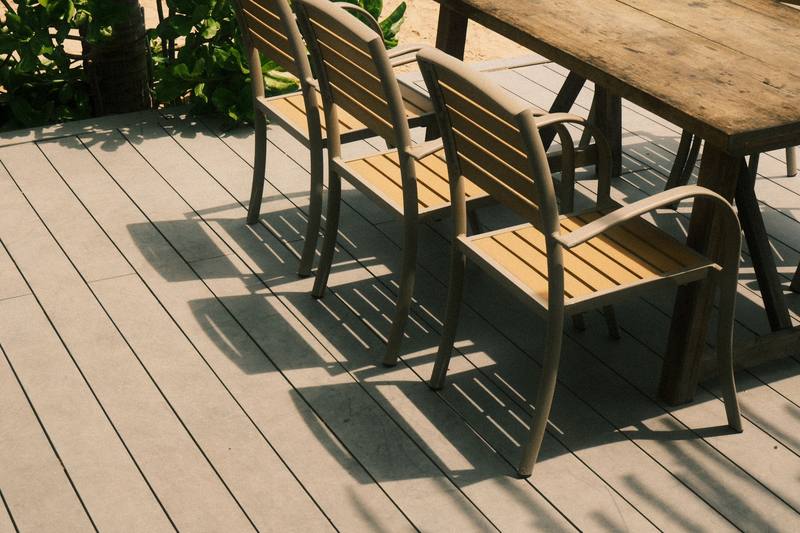
A stain or sealer is the cheapest way to make a wood deck last longer, but only if the wood is sound and the prep is done properly. We check the boards first, fix what needs fixing, then clean and coat the deck with a product that suits how much sun and shade it gets. If staining isn't the right answer for your deck, we will tell you.
Why a deck in Everett needs a coating
A deck takes more weather than any other wood outside your house. It lies flat, so water sits on it instead of running off. In Everett the wet season runs from fall well into spring, and boards can stay damp for weeks at a time. Then summer brings enough sun to bleach the surface and open small cracks along the grain.
A good stain or sealer can't stop that cycle, but it slows it down. It cuts how much water soaks into the wood. It blocks some of the ultraviolet light that turns boards grey. It also makes the surface harder for mildew and moss to take hold. Wood that takes on less water swells and shrinks less, so you get fewer split boards, fewer cupped boards and fewer screws working loose.
Signs your deck is due
You don't need to guess. A few quick checks will tell you most of what you need to know.
- The water test: sprinkle water on a few boards in a sunny spot. If it beads up, the finish is still working. If the wood darkens and soaks it in within a minute or so, the boards have no protection left.
- Grey, fuzzy boards: the sun has broken down the top layer of wood fibres.
- Peeling or flaking: common with solid stains and film-forming sealers, mostly on the walking surface.
- Green or black patches: mildew, algae or moss, usually in shaded corners, under planters and near downspouts.
- Splinters and raised grain along the paths people walk most.
Stain, sealer, or repair first
Before any coating goes on, we check whether the wood underneath is worth coating. Stain over soft or rotted boards traps moisture and hides the problem for a season. You can check this yourself: press a screwdriver into any board that looks suspect, especially at the board ends, around posts and where the deck meets the house. If it sinks in easily, that board needs replacing. That falls under our rot repair and deck repair work, and it should be done before staining.
If the boards are sound, the choice comes down to looks and upkeep:
- Clear and lightly tinted sealers show off the grain but need recoating more often.
- Semi-transparent stains add colour and more protection from the sun while still showing the grain. For most wood decks around Everett, this is what we suggest.
- Solid stains hide the grain and can even out mismatched or older boards. They can peel on walking surfaces, and they are harder to strip later.
What a staining visit involves
A staining job is mostly preparation. Putting the coating on is the quickest part.
- Inspection: we walk the deck and check the boards, fasteners, railings and the area where the deck attaches to the house. We test the old finish to see how well it is holding.
- Small repairs: we set raised nails or swap them for screws, and replace any boards that fail. If we find anything structural, we point it out before going further.
- Cleaning: a deck cleaner lifts dirt and mildew, and a stripper takes off old finish that is failing. If we pressure wash, it is at low pressure, because too much pressure gouges soft wood and raises the grain.
- Drying: the wood has to dry out properly before it is coated. Coating damp wood is one of the most common reasons a new finish peels early.
- Coating: we sand rough spots, then brush or pad the product into the boards, paying attention to board ends, stair treads and the gaps where water collects.
What is different about decks around Everett
The marine climate here is mild, and that helps wood in one way: we rarely get the long hard freezes that split boards in colder places. The cost is moisture. Plenty of lots in and around Everett have tall firs and cedars, so decks sit in shade, collect needles and stay damp long after the rain stops. Those decks grow mildew and moss faster, and they often need a yearly cleaning even when the stain still has some life in it.
The type of house matters too. Many older homes have low decks built close to the ground, with little air moving underneath, so the framing and the undersides of the boards stay wet. Newer homes in subdivisions in Mill Creek, Lake Stevens and Marysville often have raised decks off the kitchen, where the stairs and railings need as much attention as the floor. Decks near the water in Mukilteo and Edmonds take wind-driven rain on the side facing the Sound, and that side usually wears out first.
Timing matters more here than in drier places. The wood needs a run of dry days before it is coated and while the coating sets, so most staining in Snohomish County happens from late spring to early fall. If you call early in the season, we have a better chance of finding a good dry window for your deck.
Keeping the finish going between coats
A few habits will make a coat of stain last noticeably longer.
- Sweep needles and leaves off often, and clear the gaps between boards so water can drain.
- Move planters, mats and furniture now and then so water doesn't sit under them.
- Keep gutters and downspouts clear so they don't spill onto the deck.
- Wash the deck with a mild deck cleaner each spring.
- Do the water test once a year, and recoat when water stops beading, before the wood turns grey.
FAQ
Common questions about deck staining and sealing
It depends on the product, how much sun the deck gets and how much foot traffic it sees. Deck boards wear out faster than railings, and shaded decks often need cleaning before they need new stain. The simplest guide is the water test: once water stops beading and soaks straight in, it is time to recoat.
Usually not well. Stain needs dry wood and a few dry days while it sets, and Everett rarely gives you that between October and spring. We schedule staining for the drier months so the coating has a fair chance to bond.
Not always. If the old finish is the same type and still holding evenly, a thorough cleaning is often enough before a fresh coat. Peeling solid stain, or switching from a solid stain to a semi-transparent one, means stripping the old coating off first.
Usually not. New treated lumber is often too wet to take a stain straight away and needs time to dry out first. We use the water test and the product instructions to decide when the boards are ready.
Generally no. Composite boards are made to go without stain, but they still need cleaning to keep mildew and grime off, especially in shady spots. Follow the cleaning guidance from the decking manufacturer.
We show you the boards and explain what we found before doing anything else. Soft or rotted wood should be replaced before staining, because a coating over it traps moisture and hides the damage. Once the repairs are done, we clean and coat the deck as planned.
Get Started
Tell us what your deck is doing
Call (425) 010-0006 or send a note through the form. Tell us about the deck and what you have noticed, and we will set up a time to look at it.