How do you fix a wobbly deck railing?
You fix a wobbly deck railing by making the posts rigid again, usually with through-bolts and added blocking, and you replace any post or framing that has gone soft.
A railing that moves when you lean on it is telling you something about the posts and the frame underneath. Sometimes the fix is a few new bolts. Sometimes the wood has rotted and the post has to come out, which is common on decks around Everett that stay damp for much of the year.
The short answer
A wobbly railing almost always comes down to the posts. The top rail, the balusters and the cap are rarely the real problem. The post is what moves. It moves because its connection to the deck frame has loosened, because the bolts have crushed into the wood and left a gap, or because the wood around the fasteners has started to rot.
The fix is to make each post rigid again. On a sound deck, that usually means removing the old fasteners and replacing them with through-bolts or structural screws with proper washers. In many cases it also means adding solid blocking between the joists behind the post, so the post has something firm to pull against instead of a single board. Purpose-made post-to-joist hardware does a similar job and is common on newer builds.
If the post itself is soft, split, or was notched too thin where it wraps around the rim joist, tightening it will not hold for long. That post needs to be replaced, and the framing it attaches to needs to be checked at the same time. If the wobble is only at the top, where a rail meets a post, the job is smaller: new screws, a new bracket, or a replaced section of rail.
What changes the answer on a real deck
Two decks with the same wobble can need very different repairs. The first thing that matters is how the post is attached. Posts held on with two lag screws into the outside of the rim joist loosen over time, because the screws only grip one board and the wood fibres around them slowly give way. Posts that are through-bolted and backed by blocking tend to stay tight much longer.
The second thing is what the post is attached to. If the rim joist is sound and well fastened to the joists, a post repair is straightforward. If the rim joist flexes outward when you push on the post, the problem is in the frame, not the railing, and the repair has to start there.
The third thing is the condition of the wood. In Everett and the rest of Snohomish County, the wet season runs long. Posts stay damp from fall into spring, and the top end grain soaks up water if the post has no cap. Shaded sides of a house grow moss and dry out slowly. Rot often starts at the bolt holes, at the base of the post where it meets the decking, or where the post sits tight against the rim joist and water gets trapped between them.
Height matters too. A loose railing on a low deck near the ground is a nuisance. On a second-storey deck, or on a deck built over a slope, which is common on hillside lots, it is a fall risk and should be treated as one. Finally, composite and metal railing systems have their own brackets and fasteners. When they loosen, the fix usually follows the system's own hardware rather than standard wood framing methods.
What you can check yourself
You can learn a lot in ten minutes without tools. Walk the railing and push each post sideways, firmly, with your hands. Do not throw your full weight at it on a raised deck. Note which posts move and whether the movement is at the top of the post or down at the base. Movement at the base points to the connection or the framing.
Look at the bolts and screws. Rust streaks running down the wood, nuts that turn with your fingers, or a visible gap between the post and the rim joist all mean the connection has loosened. Look at the top of each post for cracks and dark, soft end grain.
Take a screwdriver and press it into the wood at the base of a post and along the rim joist next to it. Sound wood resists. If the tip sinks in easily or the wood feels spongy, there is rot. If you can safely get under the deck, look at the back of the rim joist where the posts attach and check whether there is any blocking at all.
If the posts are through-bolted, the wood is solid and the nuts have simply backed off, tightening them is a reasonable first step. Do not add more lag screws to a post that is soft or split. That only gives the next fastener less to grip, and it can hide a problem that keeps getting worse.
When it needs a professional
Call someone when the screwdriver finds soft wood, when the post moves at its base, when the rim joist moves along with the post, or when more than one or two posts are loose. Those signs mean the repair involves the deck frame, and getting it wrong leaves a railing that looks fixed but will not hold a person who stumbles into it.
Stair railings deserve the same attention. Stair posts take a lot of sideways load from people grabbing them, and they are often attached to stringers with less material to work with than a rim joist.
A simple rule: if anyone could fall a meaningful distance through that railing, treat that section as unusable until it is fixed. Keep children and guests off it. If posts or full railing sections are being replaced, local code requirements may apply, and those should be checked before the work starts, not after.
How this fits with the rest of the deck
Most of the loose railings we look at around Everett turn out to be one of two things. Either the posts need better fastening and blocking, which falls under our Deck Railing work, or the wood around the posts has started to decay, which is Rot Repair. Often it is a bit of both, because a loose post lets water into the bolt holes and the rot speeds up from there.
A visit usually starts with the same push test and probing you can do yourself, followed by a look underneath at the rim joist, the blocking and the ledger where the deck meets the house. From there we can tell you whether the railing can be tightened and reinforced, whether some posts need replacing, or whether the frame needs work first. If the deck is older, has never been looked at closely, or you are not sure what you are seeing, a Deck Inspection is a sensible place to start before deciding on anything.
Related questions
If the post is through-bolted and the wood around the bolts is solid, tightening the nuts can help for a while. If the post is held with lag screws, or the wood is soft or split, tightening will not last. In that case the connection needs to be rebuilt or the post replaced.
Wood shrinks and swells with the seasons, and fasteners slowly crush the fibres around them, which leaves a gap. Water gets into bolt holes and post tops and starts rot. In a wet climate like Everett's, that process is faster on posts that stay damp for months.
It can be. A railing only matters at the moment someone leans on it or stumbles into it, and that is when a loose post fails. On a raised deck or stairs, treat a loose railing as unsafe until it has been checked and repaired.
Usually not. A single loose post can often be reinforced or replaced on its own, with the rail sections reattached. If several posts are soft or the framing behind them is damaged, a larger repair or a new railing may make more sense.
Press a screwdriver into the wood at the base of the post and around the bolt holes. Sound wood resists, while rotted wood is soft, spongy or crumbles. Dark staining, cracks at the post top and rust streaks from the fasteners are also common signs.
Services
How we can help in Everett
Deck Repair
Soft boards, loose railings, failed ledgers and rotten posts fixed so the deck is safe again.
Learn more
Deck Building
New decks framed and finished in wood or composite, permitted and inspected where required.
Learn more
Deck Replacement
Tired decks taken down and rebuilt, keeping sound framing where it makes sense.
Learn more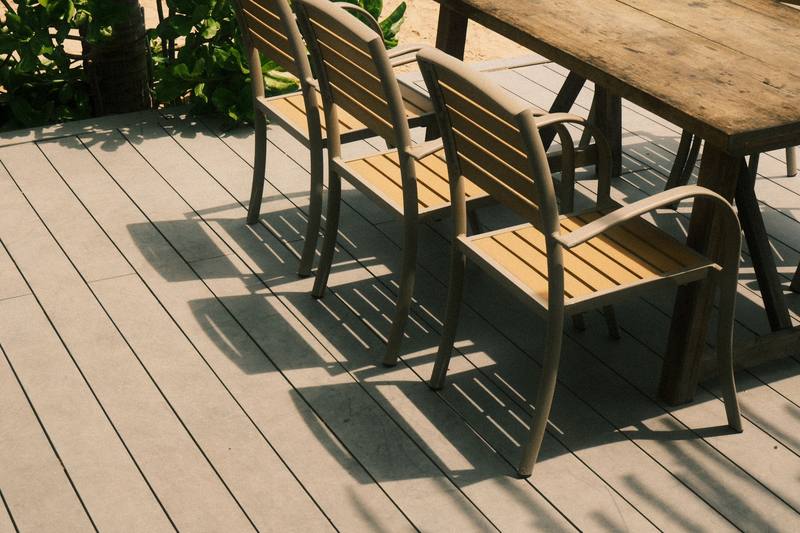
Deck Staining and Sealing
Cleaned, brightened and sealed so the wood sheds water instead of soaking it up.
Learn more
Composite Decking
Low-maintenance boards and railings on new or existing frames.
Learn more
Deck Railing
Railings replaced or added to code height, in wood, cable, aluminum or composite.
Learn more
Deck Inspection
A written look at ledger, posts, joists, fasteners and rails before you buy, sell or host.
Learn more
Rot Repair
Rotten boards, posts and beams cut out and replaced, with the moisture source addressed.
Learn more
Emergency Deck Repair
When part of your deck moves, cracks or gives way, we come out during business hours to make it safe and explain what failed.
Learn more
Get Started
Tell us what your deck is doing
Call (425) 010-0006 or send a note through the form. Tell us about the deck and what you have noticed, and we will set up a time to look at it.