Do I need a permit for deck repair in Everett?
Small repairs that replace like with like usually don't need a permit, but structural work on the framing, posts, footings or ledger often does.
Most deck repairs in Everett fall into one of two groups: routine maintenance, or work on the structure that holds the deck up. The permit question mostly depends on which group your job is in. Here is how to tell, what you can check yourself, and when to bring someone in.
The short answer
Often, no. Small repairs that replace like with like usually don't need a permit in Everett. That includes swapping out a few cracked deck boards, tightening loose railing posts or refastening stair treads. Work that changes the structure usually does need one. That means replacing joists, beams, posts or footings, making the deck bigger, raising its height, or rebuilding a railing to a new design. The City of Everett's permit office makes the final call, and rules change from time to time. A short phone call or a look at the city's permit pages before work starts is worth the effort. Here is a simple rule of thumb. If you are putting back what was already there, with the same materials in the same place, that is usually maintenance. If you are changing what holds the deck up or what keeps people from falling off it, that is usually construction, and construction is what permits are for. When a job sits close to that line, we would rather ask the city than guess.
What changes the answer on a real property
A few details decide which side of the line a job falls on. Height is the first. Under the residential code most Washington cities use, a deck more than about 30 inches above the ground at any point is treated more strictly than a low platform. On Everett's sloped lots, a deck that looks low at the back door can sit well above the ground at the far corner, so measure at the highest point, not where you step out. Attachment is the second. A deck fastened to the house with a ledger board carries its load into the house framing, so any repair to that connection is structural. Replacing a ledger, or adding the flashing and fasteners it should have had in the first place, is the kind of work an inspector wants to see before it gets covered up. Scope is the third. Replacing a handful of boards is maintenance. Replacing most of the framing is closer to building a new deck, even if the footprint stays the same. Location matters too. Homes in unincorporated areas near Everett come under Snohomish County rather than the city. Properties near steep slopes, wetlands or shorelines can need extra review.
What you can check yourself
Half an hour with a flashlight, a tape measure and a screwdriver tells you a lot. Measure from the ground to the top of the decking at the tallest corner. Look at where the deck meets the house. Is there a ledger board? Can you see metal flashing over it, or is the siding stained and soft above it? Push a screwdriver into the joists, the beams and the bottoms of the posts, especially where wood touches the ground or other wood. Sound wood resists. Wood that gives way or comes out in soft fibres has rot. Test the railing by leaning on it with steady pressure in several places. Look at the stair stringers where they rest on the ground or a pad. Our wet winters keep wood damp for months, so rot often starts out of sight: on the tops of joists under the boards, and behind the ledger. If all you find is a few worn surface boards and loose screws, you probably have a repair that needs no permit. If you find soft framing, a sagging section or a loose ledger, expect structural work and probably a permit.
When it needs a professional
Call a professional when the problem is in the structure, when you can't tell how far the damage goes, or when the deck is high enough that a failure would hurt someone. A loose ledger, a post that has sunk or rotted at the base, a springy span, or a railing that moves under your hand are safety problems first and permit questions second. A contractor who works on decks regularly will know which repairs the city expects drawings or an inspection for, and can tell you before work starts rather than partway through. If you do need a permit, the usual steps are a simple drawing of the deck and the repair, an application, and one or more inspections. The framing is often checked before the boards go back down, so allow for that in your schedule. Skipping a permit you needed can cause trouble later, especially when you sell and a buyer's inspector asks about the deck.
How this relates to repair, rot work and inspections
Most of the calls we get in Everett are about Deck Repair: soft boards, wobbly stairs, railings that have worked loose. Many of those jobs are routine maintenance with no permit involved. Sometimes we lift the decking and find damaged framing underneath. Then the job becomes Rot Repair, and that is usually when the permit question comes up, because replacing joists, beams or a ledger is structural work. If you aren't sure what you have, a Deck Inspection is a sensible first step. We look at the framing, the ledger connection, the footings and the railing, and tell you plainly what we found. We also tell you whether the repair you need is likely to need a permit, and if it does, what the city will want to see. It is better to know that before the job starts than halfway through it.
Before you call anyone
Have three things ready: the deck's rough size, its height at the tallest point, and a few photos of the problem areas, including where the deck meets the house. If the deck was built with a permit, the original paperwork helps, and the city may have a record of it. With that, a first conversation about your deck and whether it needs a permit is usually short and useful.
Related questions
Usually not, if you are replacing boards with the same kind of material and the framing underneath is sound. Board replacement is generally treated as maintenance. If lifting the boards shows rotted joists or beams that need replacing, that part of the job may need a permit.
Tightening or replacing a few balusters or a top rail with the same design is often treated as a repair. Rebuilding the whole railing, changing its height or design, or replacing the posts that anchor it is more likely to need a permit. Railings are a safety item, so check with the city if you are unsure.
It is more common than people think, especially on older homes. It doesn't stop you from making repairs, but structural work may bring the deck to the city's attention, and a buyer's inspector may ask about it when you sell. The city's permit office can explain your options.
No. A city inspection is part of the permit process and checks that permitted work meets code. A Deck Inspection from us is a look at the condition of your deck so you know what needs fixing and whether that work is likely to need a permit.
Not always. Homes in unincorporated areas come under Snohomish County, and nearby cities such as Mukilteo, Lynnwood and Marysville each run their own permit offices. The general approach is similar, but check with the office that covers your address.
Services
How we can help in Everett
Deck Repair
Soft boards, loose railings, failed ledgers and rotten posts fixed so the deck is safe again.
Learn more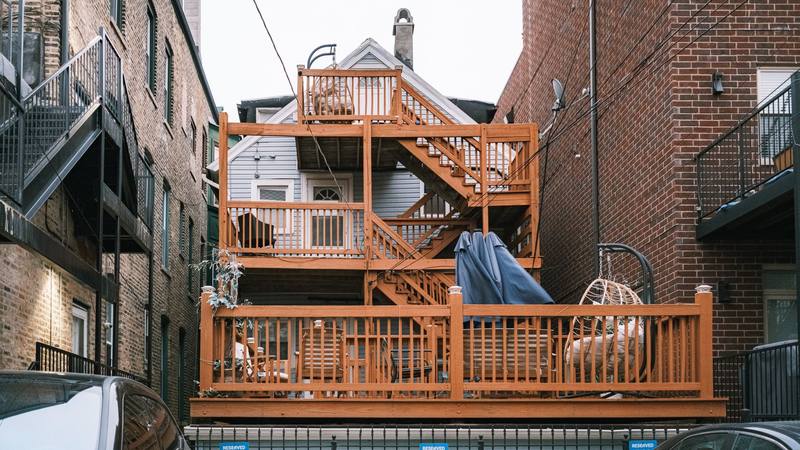
Deck Building
New decks framed and finished in wood or composite, permitted and inspected where required.
Learn more
Deck Replacement
Tired decks taken down and rebuilt, keeping sound framing where it makes sense.
Learn more
Deck Staining and Sealing
Cleaned, brightened and sealed so the wood sheds water instead of soaking it up.
Learn more
Composite Decking
Low-maintenance boards and railings on new or existing frames.
Learn more
Deck Railing
Railings replaced or added to code height, in wood, cable, aluminum or composite.
Learn more
Deck Inspection
A written look at ledger, posts, joists, fasteners and rails before you buy, sell or host.
Learn more
Rot Repair
Rotten boards, posts and beams cut out and replaced, with the moisture source addressed.
Learn more
Emergency Deck Repair
When part of your deck moves, cracks or gives way, we come out during business hours to make it safe and explain what failed.
Learn more
Get Started
Tell us what your deck is doing
Call (425) 010-0006 or send a note through the form. Tell us about the deck and what you have noticed, and we will set up a time to look at it.